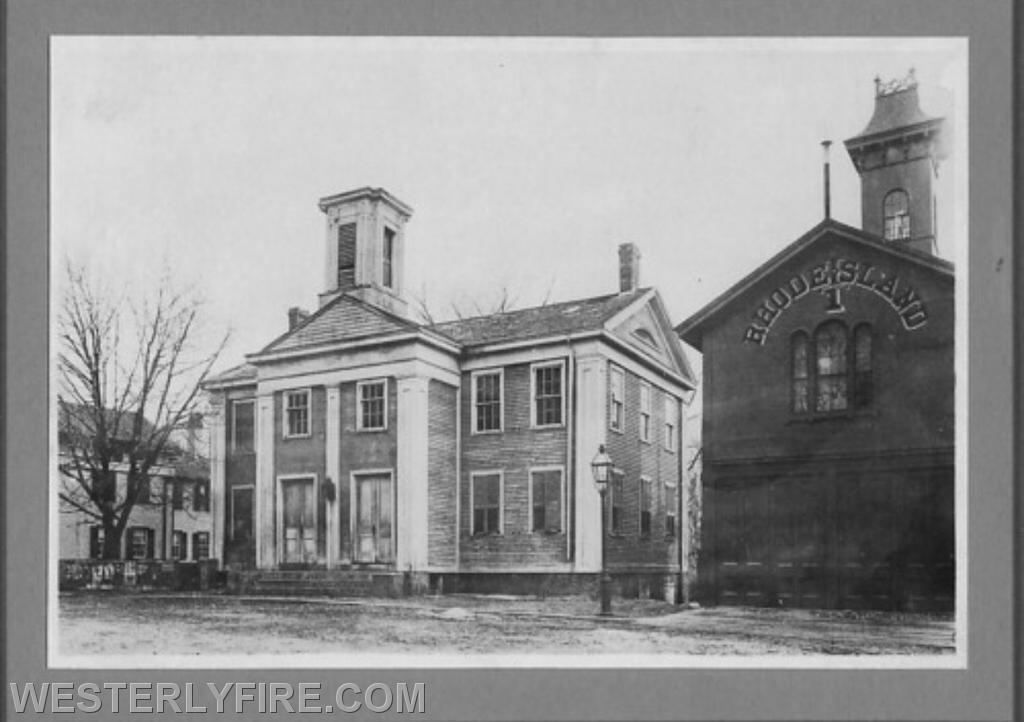
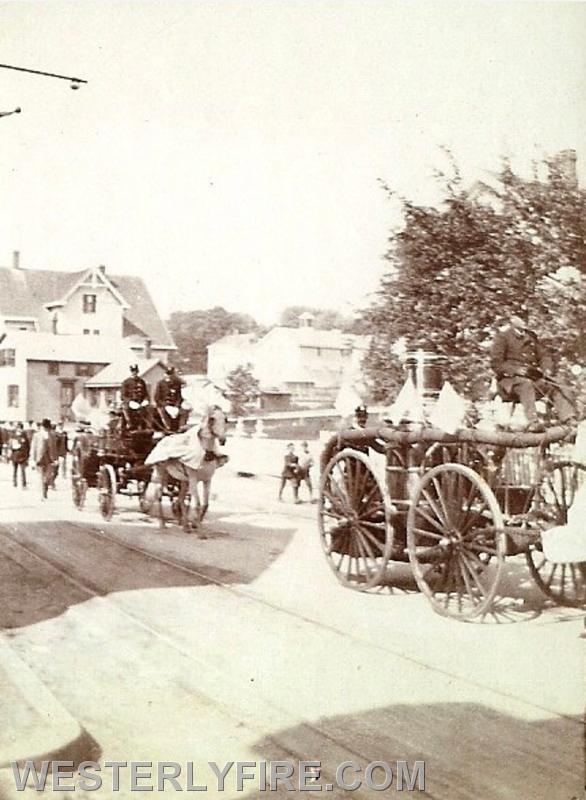
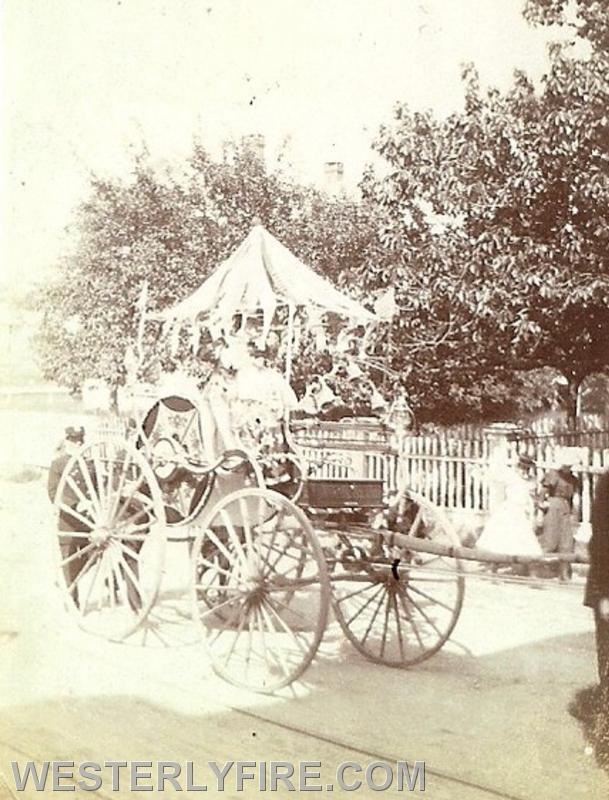
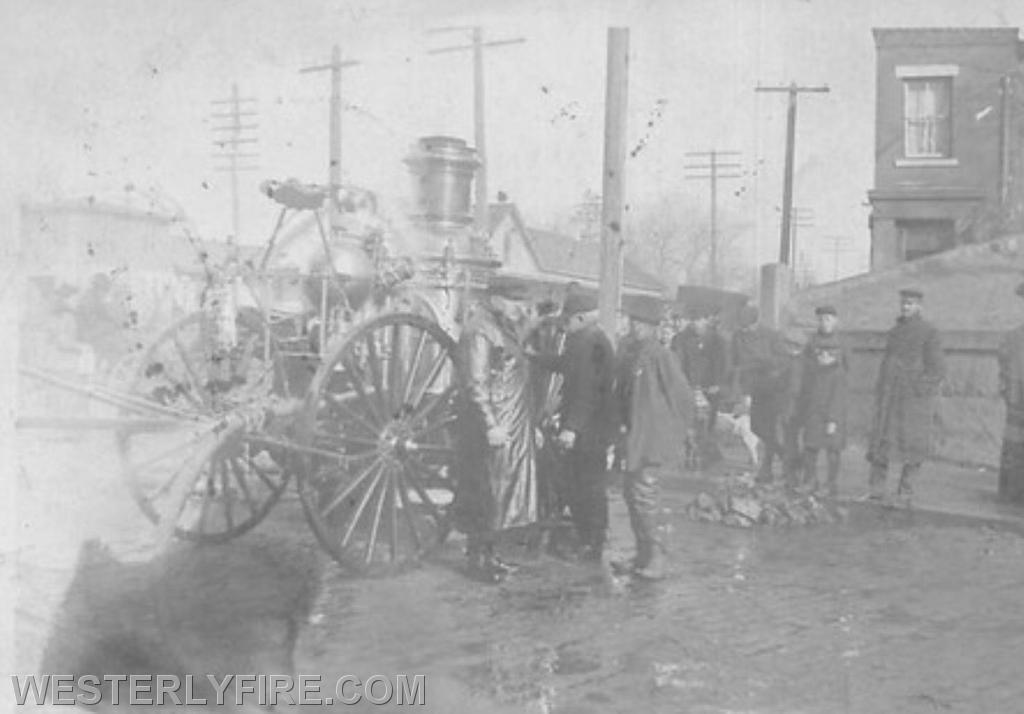
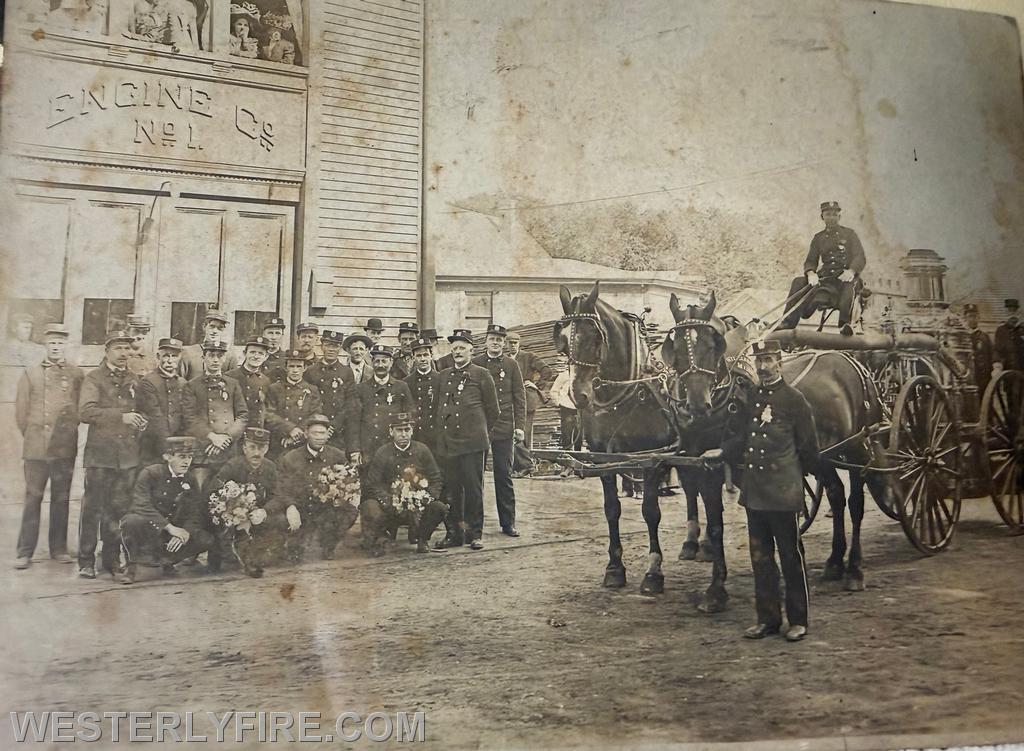
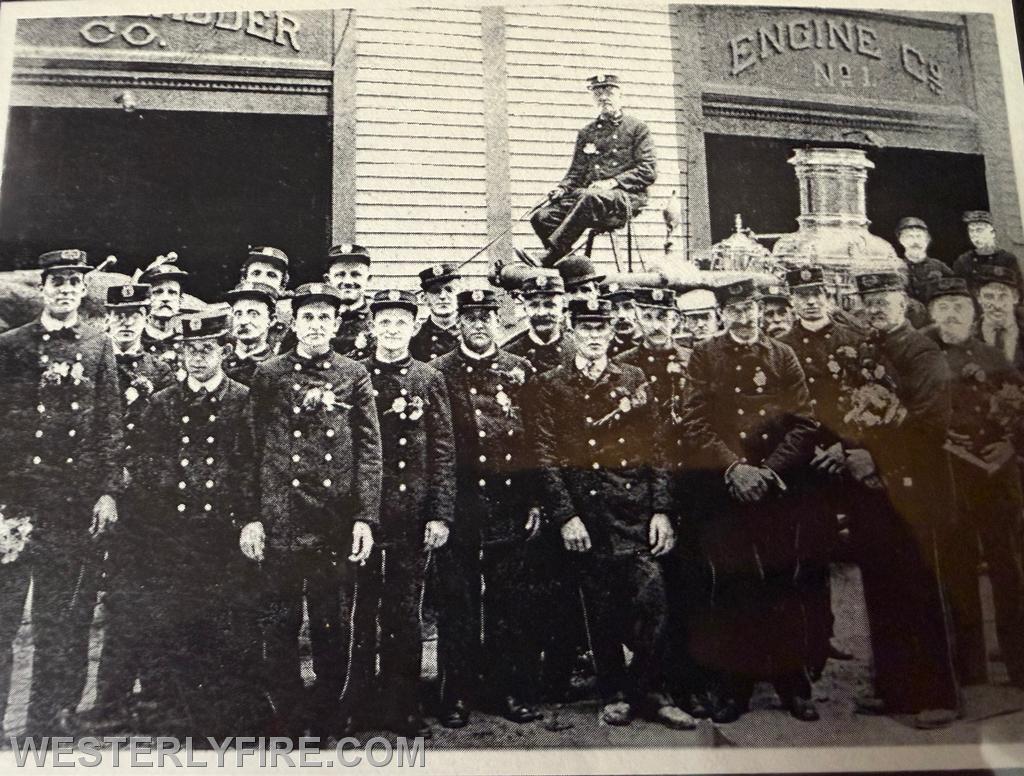
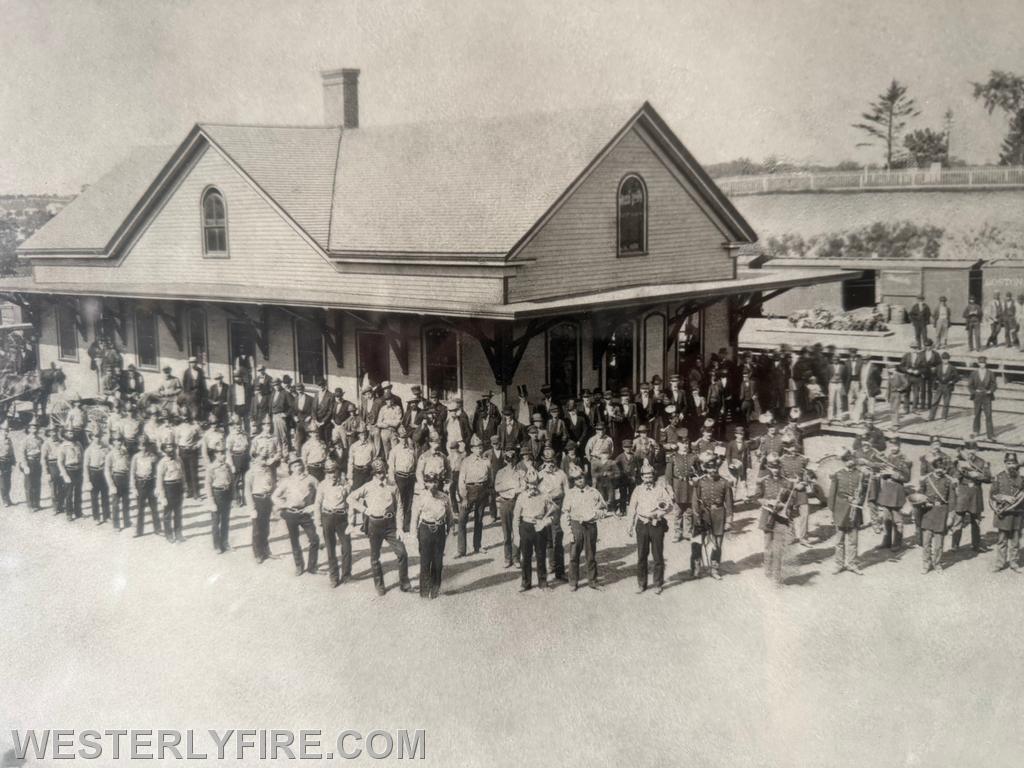
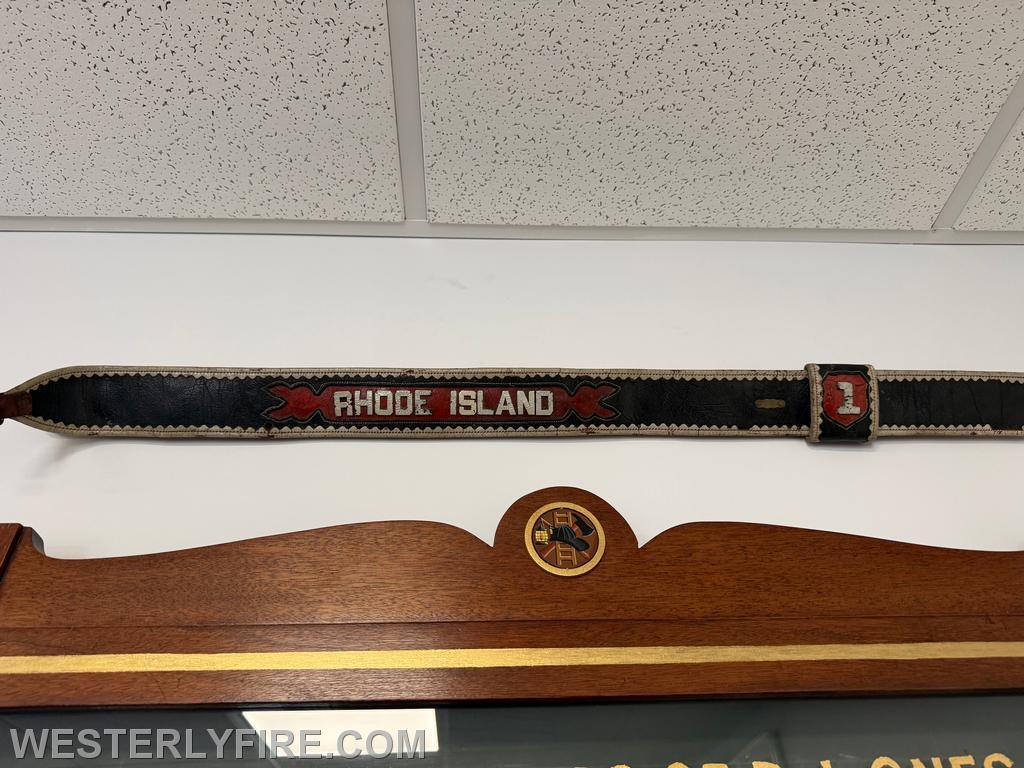
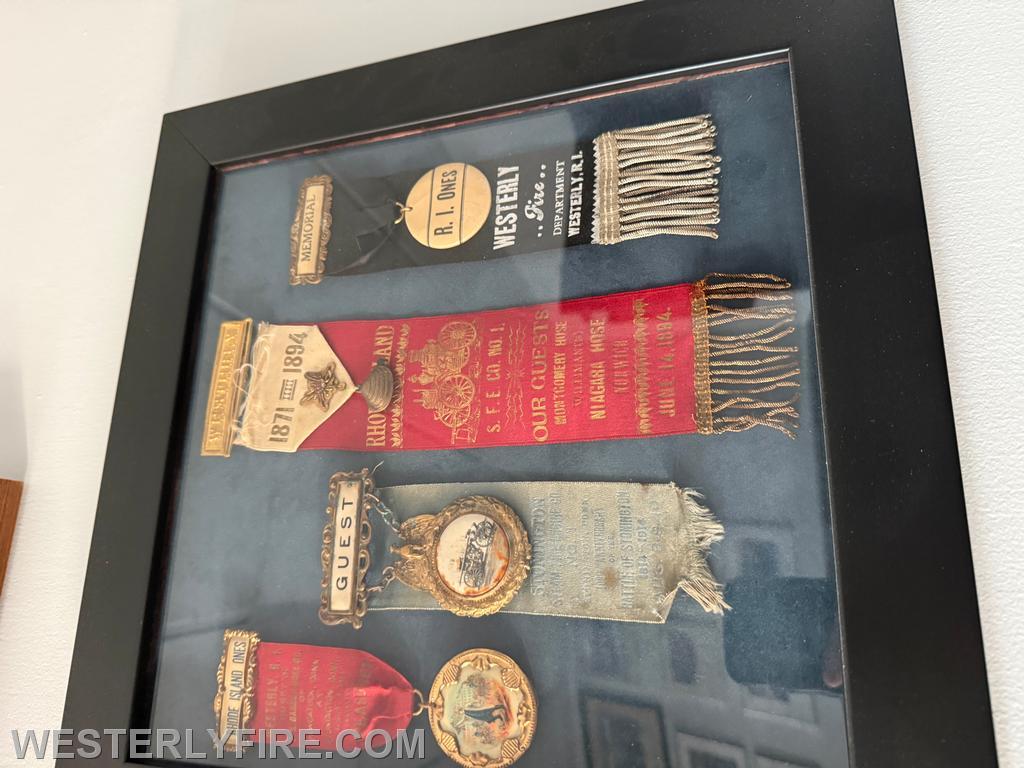
| The Rhode Island Steam Fire Engine Co. 1 was chartered in 1869 as the Westerly Fire Engine Co. 1, though the company soon changed its name to honor its new equipment. While the organization we recognize today formally began in 1869, its lineage in the history of the Westerly Fire Service can be traced back to 1819, when the town purchased its first hand-pump engine from Boston. Later, in 1844, a hand tub was purchased, that same year, the state chartered the Westerly Fire Engine Company. By 1851, the company voted to change its name to the Gazelle Engine Co., and in 1856, they built their first engine house on Union Street, a large, single-bay, wood frame firehouse used to store equipment and hold meetings and drills. For the next 13 years, the men of the "Gazelles" fought countless fires in the growing town of Westerly as well as neighboring Pawcatuck. However, as the community expanded, so did the need for a more organized and modernized fire service.
From 1844 up until this pivotal era, the Gazelles relied only on a hose cart and a "hand-tub" a entirely man powered pumper. Operating this equipment was physically exhausting, requiring members to manually pump the engine and constantly trade places to avoid collapse. The company also appointed several men to a "Flambeau Division." During alarms after sundown, these men would run ahead of and alongside the hand-pulled carts with torches to light the way for the responding firemen.
The Dawn of Steam
The town was growing faster than its manual equipment could handle. A series of devastating fires in the 1850s and early 1860s completely destroyed businesses and homes in the downtown Westerly and Pawcatuck areas. Recognizing the need for advanced, reliable firefighting technology, the Gazelles united with the newly established Westerly Fire Engine Co. 1 in 1869 to become the Rhode Island Steam Fire Engine Co. 1. They named themselves after their new, state of the art steam fire engine, the Rhode Island No. 1.
This revolutionary apparatus was no longer pulled by the men themselves, but by horses. Once on the scene, a fire was lit in its boiler. As soon as a water source, such as a river or cistern, was established and the internal fire built up enough steam pressure, the engine would powerfully propel water through the hoses.
The pace of change accelerated the following year. With the formation of the Westerly Fire District in 1870, the "Ones" disbanded as an independent entity and reformed under the district's official jurisdiction. The first Chief of Department was Charles Maxson, and the first Foreman was William Greene, who had served as the last Foreman of the independent Rhode Island Ones.
Proving Their Worth
The Rhode Island No. 1 was the first steamer in Westerly, purchased and delivered in 1869. The steamer’s first trial by fire occurred on June 4, 1869, at the C. Maxson Co. on Main Street. The fire spread rapidly; according to a June 6 article in the Westerly Sun, the blaze was described as "like a sheet of flames covering the front of the building."
Upon arrival, the engineer got the steamer fired up and the pressure built within just eight minutes. The firemen stretched their hoses and began extinguishing the flames to the great admiration of local civilians and employees. The steamer successfully held back the flames and saved a vital, well known business in the downtown district,a feat a manual hand tub never could have accomplished. This effort saved the riverfront from a devastating conflagration that had the fire load capacity to destroy an entire commercial block. With this victory, the Ones and their favorite piece of apparatus proved their worth, the hand tub would stay, and serve as a supplemental fire suppression apparatus, but going forward the Steam Fire Engine was first line of defense.
A Lasting Legacy
The Ones would face many more fires over the next 14 years before the arrival of the Alert Hook & Ladder Company. During that era, they frequently participated in parades and social events with companies from neighboring towns and cities, most notably the Stonington Steam Fire Engine Co. and the Neptune Steam Fire Engine Co. in Stonington, as well as the B.F. Hoxie Engine Co. in Mystic.
The fire company became a foundational staple of the community, and in 1895, they were joined by another engine company, the Cyclones. To this day, the legacy of these Westerly Fire Service pioneers lives on. In the 1890s, Chief John Himes, former captain of the Ones, was instrumental in bringing another cutting edge fire prevention technology to town: the Gamewell Fire Alarm System. This system was set up throughout town, with red pull boxes placed at designated intersections, each identified by a specific number.
In the days before telephones, if a building caught fire, a policeman or civilian could find the nearest pull box, pull the lever, and sound the alarm. The signal, similar to a telegraph system, would travel to the firehouse and trip the bells and ticker tape machine. For example, if the box number was 57, the bell would ring five times, pause, and then ring seven times. The ticker tape would punch five holes, leave a space, and then punch seven holes. The firefighters in the building would hear or read the number, allowing them to know exactly where to go. This system is in place to this day.
Without the fortitude, determination, and foresight of the Rhode Island Ones, the Westerly Fire Department as we know it today simply would not exist |